Two missteps in two years. Same crack in the brief.
Last week, in the window of the Nike store on Newbury Street, a few blocks from the Boston Marathon finish line, a sign went up that read: “Runners Welcome. Walkers Tolerated.”
It came down fast, after public backlash from para runners, adaptive athletes, run-walkers, and anyone who has ever had to walk a stretch of a marathon for a cramp, a cyst, an injury, or on the mend from a serious illness. Nike apologized and said the sign “missed the mark.” Meanwhile, Asics put up a billboard near the course that read Runners. Walkers. All Welcome. Altra posted, Go where you’re celebrated. Not where you’re tolerated. Adidas chimed in with Every pace has a pace. Competitors rarely hand you a gift like that. Nike handed out three in a single week.
If this were an isolated stumble, you could chalk it up to a bad room, a bad day, a bad sign. But this is the second time in two years Nike has built creative around the same idea: that sport belongs to the ones who are winning it. And both times, it has crashed into the actual audience.
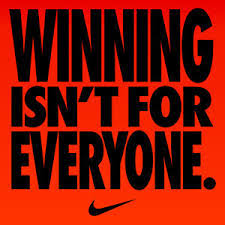
In July 2024, just before the Paris Olympics, Nike rolled out Winning Isn’t for Everyone, a Willem Dafoe-narrated anthem that declared, I have no empathy. I don’t respect you. I’m never satisfied. Elite-athlete fans loved it. Everyone else didn’t. System1’s sentiment testing clocked it at 1.5 stars from general viewers, one of Nike’s worst scores on record. Adidas ran a counter-campaign built around the amateur athlete and quietly took the momentum. And now, Boston. Two different briefs. Same crack in the thinking.
 The game every brand is in right now, more than ever, is the attention game. Attention is a currency, and a vital one. But there’s a difference between attention that pulls people toward a brand and attention that pushes them away, and the difference almost always comes down to whether there’s a real insight underneath.
“Walkers Tolerated” wasn’t an insight. It was a provocation looking for a point of view. It reads like the work of a creative leader who wanted to be edgy without doing the work to earn it, or a team that confused bold with better. Either way, it’s a craft failure. And it’s the same craft failure that produced “Winning Isn’t for Everyone.”
Here’s what building brands for big, mixed, messy audiences teaches you. When a brand is trying to grow its appeal across multiple segments, picking a side is almost never the move. That’s especially true in sport, where the consumer base runs from ultra-marathoners to someone taking their first walk around the block after a health scare. The move is to find the shared value that cuts across all of them. The emotion, the belief, the motivation that sits one layer beneath pace and PR and podium finish.
Great brands find the thread. Lazy ones draw a line.
The cleanest proof point comes from outside sport. In 2004, Dove launched Real Beauty off a single research finding: only 2% of women worldwide described themselves as beautiful. The entire beauty category was selling a version of beauty that 98% of its audience felt excluded from. Dove saw the gap between what consumers wanted and what the category was giving them, and closed it. Over the next decade, Dove sales more than doubled, from roughly $2.5 billion to over $4 billion. That wasn’t because the moisturizer got better. It was because the brand finally stood for something a full spectrum of consumers could see themselves in. That’s where durable insight lives: in the gap between what an audience wants from a category and what the category is actually delivering.
Nike used to know this. In 2012, boxed out of the London Olympics by Adidas’s title sponsorship, Nike built Find Your Greatness around a simple idea: greatness isn’t reserved for the podium. It’s the twelve-year-old kid jogging down a long, empty road in London, Ohio, working toward his own version of it. That campaign broadened the brand without watering it down. It said, in effect: whoever you are, wherever you sit on the spectrum, you are one of us. That’s what Nike got right. And it’s the exact opposite of what the last two briefs have gotten wrong.
Because the range of people who call themselves athletes is wide. It runs from the six-minute-miler to the ultra-marathoner. From the pro to the weekend warrior. From the high school kid starting cross country to the fifty-eight-year-old walking two miles a day to get her blood pressure back under control. Every one of those people is chasing a better version of themselves. That is the insight. That is the shared value. That is the thread Nike should be pulling. Instead, Newbury Street sent a different message: we’re for the top tier, and if you don’t belong up there, we’ll condescend to let you stand in the room. That’s the brand equivalent of being the bouncer instead of the host.
And here’s the part that should concern Nike most. Truly elite brands don’t announce that they’re elite. Hermès doesn’t tell you that you can’t afford it. Rolex doesn’t remind you that you’re not the target. Elite brands are exclusive without saying so, because they show it through craft, quality, taste, and restraint. Not through declaration. The moment you have to say you’re exclusive, you’ve broken the spell. “Walkers Tolerated” did both things at once. It put up a wall between Nike and the non-elite runner, and then it shouted about the wall. That isn’t how an elite brand behaves. That’s how an insecure one does.
And none of this is happening in a vacuum. Nike’s fiscal Q4 2024 landed down 2%, with Nike Direct off 8%. It has lost ground in specialty running stores to Brooks, Hoka, On, New Balance, Asics, and Saucony. Elliott Hill came back as CEO 18 months ago specifically to win runners back. And then, during race week at the sport’s most culturally loaded marathon, his own stores put up signage that alienated a big chunk of the exact audience he’s trying to re-earn. You can’t out-spend that. You can only out-think it.
So, a note to Nike. The fix isn’t a better sign. It’s a better brief. Attention without insight is a false first step, and it almost always leads somewhere you don’t want to go. The job of a brand, any brand, is to serve the needs, wants, beliefs, and motivations of its audience. Not to judge them. Not to tolerate them. To serve them.
Bill Bowerman, who co-founded Nike, wrote the line a long time ago:
“If you have a body, you are an athlete.”
That’s the real brief. Nike wrote it back in the day.
They should re-read it. And then read it again.