Last week, a sign went up in the window of the Nike store on Newbury Street, a few blocks from the Boston Marathon finish line. It read: “Runners Welcome. Walkers Tolerated.”
It came down fast. The backlash came from para runners. Adaptive athletes. Run-walkers. Anyone who has ever had to walk a stretch of a marathon for a cramp, a cyst, an injury, or a chemo round. Nike apologized and said the sign “missed the mark.”
Meanwhile, Asics put up a billboard on the course: Runners. Walkers. All Welcome. Altra posted, Go where you’re celebrated. Not tolerated. Adidas: Every pace has a pace. Competitors rarely hand you a gift like that. Nike handed out three in a single week.
Boston wasn’t a one-off. It’s a pattern.
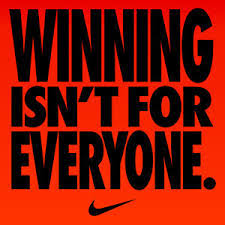
Look at it next to Winning Isn’t for Everyone, the Willem Dafoe-narrated Paris 2024 Olympic anthem that declared: “I have no empathy. I don’t respect you. I’m never satisfied.”
System1 sentiment testing scored that spot 1.5 stars out of 5 with mainstream viewers. Among the lowest the brand has ever recorded.
Two executions. Two years. Same posture: sport belongs to the elites who win. Boston, two years after Paris, is the same brief with less budget. When the posture stays the same, the market stops giving you the benefit of the doubt.
They’re now contradicting their own tagline.
“Just Do It” was always a permission slip. Lately, Nike is writing a rulebook.
The genius of Just Do It has always been that it doesn’t tell you what it is. It doesn’t grade you. It doesn’t rank you. It puts a hand on your shoulder and pushes you out the door. Whoever you are, whatever you’re chasing, go. That’s the permission slip that turned Nike into the most valuable sports brand on earth.
Winning Isn’t for Everyone and Walkers Tolerated do the opposite. They don’t hand out a permission slip. They hand out a pass/fail grade. You’re in, or you’re not. You’re doing it Nike’s way, or you’re being tolerated. The work tells the world there’s a right way to do it. That’s never been Nike’s line.
Nike has lost sight of brand and marketing truths.
None of these show up in Winning Isn’t for Everyone or Walkers Tolerated.
Aspirational for everyone. The twelve-year-old on the empty road is as much a Nike athlete as LeBron. The mom pushing a stroller is as much a Nike athlete as Sha’Carri. That universality isn’t a tactic. It’s the positioning.
Adapt the situation, not the principles. Growth doesn’t come from changing who you are. It comes from adapting to new situations without compromising what made you. Find Your Greatness did this. Walkers Tolerated didn’t.
Elite brands don’t say it out loud. Even if Nike wanted to be elite, this isn’t how elite brands behave. Hermès doesn’t tell you that you can’t afford it. Rolex doesn’t remind you that you’re not the target. The moment you have to say you’re exclusive, you’ve broken the spell.
Nike’s stock price puts a period on this point as well. It’s at in all time low in the past five years, so the market seems to agree.
2012: What Nike’s leadership looked like at its best.
In 2012, boxed out of the London Olympics by Adidas’s title sponsorship, Nike built Find Your Greatness around a single idea: greatness isn’t reserved for the podium. It’s the twelve-year-old kid jogging down an empty road in London, Ohio, working toward his own version of it.
That campaign broadened the brand without watering it down. It adapted to a new situation. A sponsorship lockout. A media moment Nike couldn’t officially own. And it came away standing for the same thing it has always stood for.
That’s the move.
Growth doesn’t come from changing who you are. Growth comes from adapting to new situations with your principles intact.
Nike’s stumble points to a larger issue.
There’s a structural lesson here, beyond Nike. Maintaining a consistent brand across a global footprint is one of the hardest problems in modern marketing. Thousands of stores. Hundreds of markets. Dozens of campaigns in parallel. In a churn-and-burn environment, fractured messaging is what you get unless you actively defend the brand.
The Newbury Street sign is almost certainly not what global brand headquarters would have approved if the brief had come up a level. But in a fast-moving, contextually adaptive system, small decisions get made in small rooms every day. And each one is a chance for the brand to drift away from what it actually stands for.
Contextual relevance and market adaptation are necessary. Boston doesn’t get the same message as Tokyo. A running store doesn’t get the same message as a lifestyle flagship. That’s not the problem. The problem is when the adaptations stop laddering back to a single, defended positioning. When a local team reaches for a clever line and nobody checks whether the line still sounds like the brand.
The fix isn’t locking everything down. It’s a brief so clear everyone knows it. So clear that every market team, every copywriter, every window display knows the test:
Does this still sound like us?
What Nike’s ad should have said.
“You didn’t come here to watch.”
Same competitive edge. Zero gatekeeping. The line honors the effort without ranking it. It speaks to the wheelchair racer, the charity runner, the first-timer walking Heartbreak Hill. It doesn’t tell anyone they’re being put up with.
It sounds like Nike at its best. It’s the same brand that told a twelve-year-old on an empty road he was already an athlete. That’s the positioning. That’s the brief. Every execution should pass that test.
Read it back.
Bill Bowerman, who co-founded Nike, wrote the line a long time ago:
“If you have a body, you’re an athlete.”
That’s the brief. Nike wrote it.
They should re-read it. And then read it again.